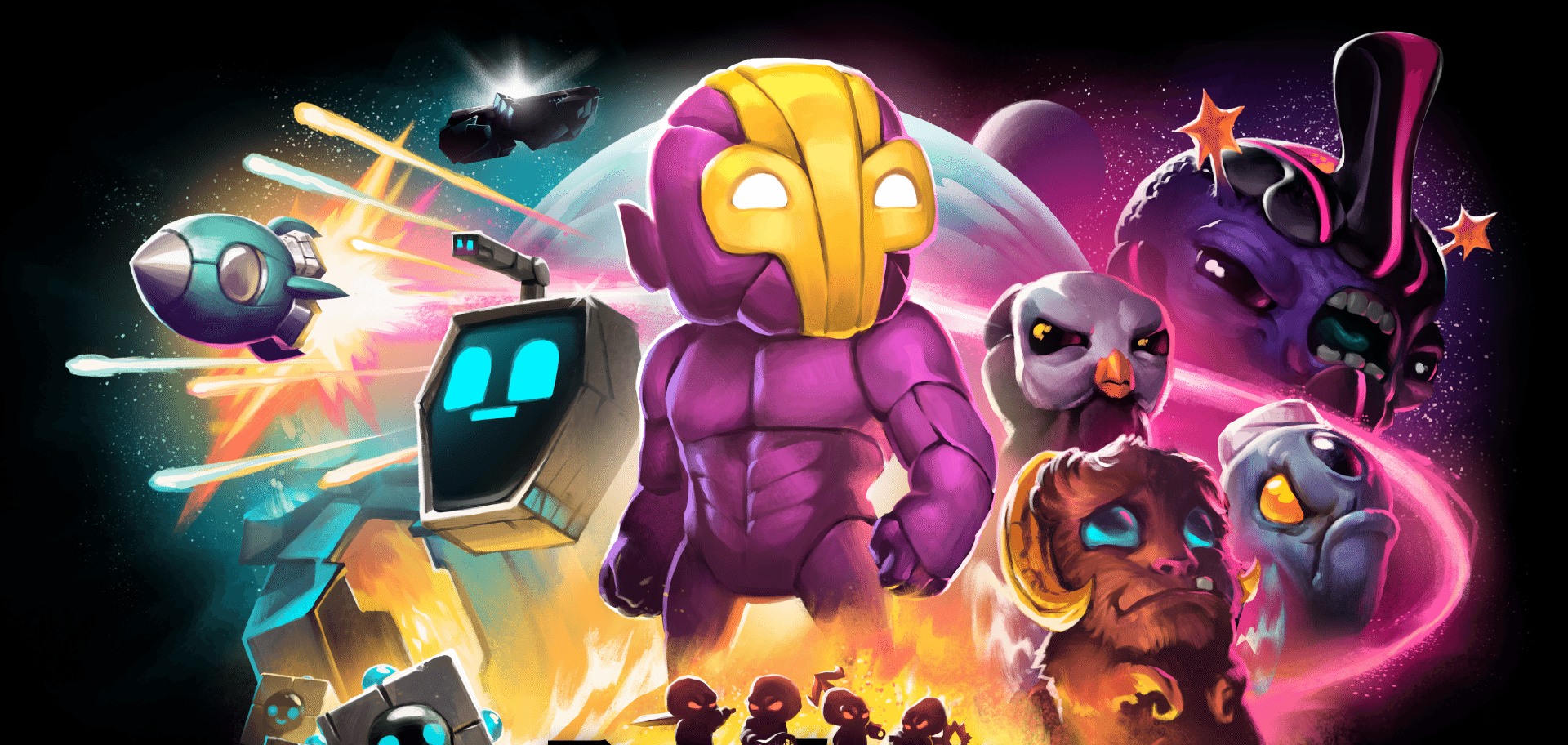
Crashlands is the kind of game that could have collapsed under the weight of its own systems. It has scavenging, crafting, quests, inventory pressure, combat, world exploration, and enough upgrade logic to scare players who normally bounce off survival games. What saves it is tone. The whole thing moves with such confidence and such a sharp sense of humor that the busywork rarely feels like busywork.
You play as Flux, a galactic trucker stranded on a hostile world after a delivery goes badly wrong. It is a setup that gives the story room to move quickly: you need supplies, you need shelter, you need answers, and you have a robot companion who is more than happy to keep the banter flowing while you build your way back to stability.
A genre loop with actual personality
Many crafting games focus so heavily on systems that they forget to make those systems feel like part of a world. Crashlands does the opposite. Recipes, item descriptions, quest beats, and incidental dialogue all feed the same comic-book energy. It never becomes precious about its humor, but it does keep the grind from turning gray.
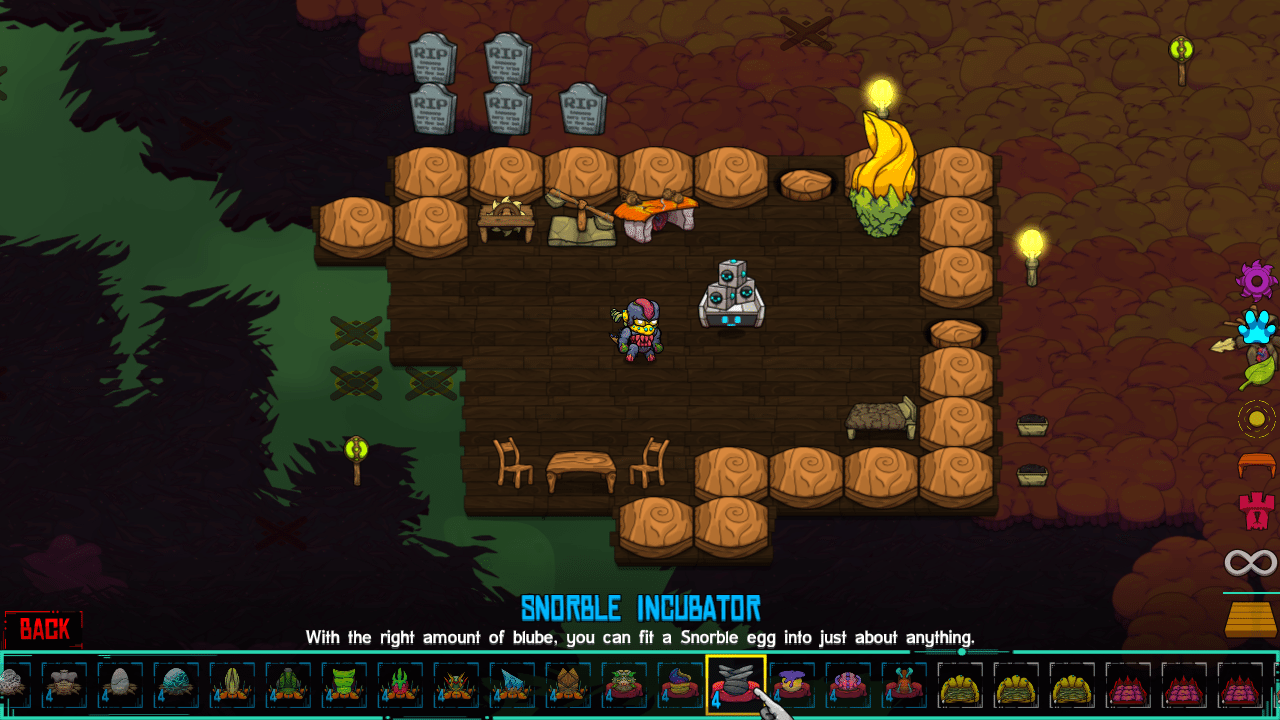
That is important because there is a lot to do. Gathering materials leads to new benches, new equipment, safer fights, and a stronger foothold in the world. The progression chain is long, but it rarely feels muddy. Most of the time the game points you toward the next useful goal without stripping out the pleasure of figuring things out for yourself.
Built for momentum
The strongest part of Crashlands is the way it keeps you moving. Tasks feed into upgrades, upgrades feed into exploration, and exploration feeds into more reasons to craft. It is a classic loop, but the pacing is unusually generous. You are seldom left wandering without purpose, and the sense of progression is constant.
Crashlands understands a crucial truth about survival games: the player should feel busy, but never directionless.
That also makes it work well on mobile. You can chip away at objectives in short sessions and still feel like you made real progress. A new recipe, a better weapon, a cleaner base layout—those small wins add up quickly.
Where the excess shows
The same abundance that makes the game exciting can also make it noisy. The interface gets crowded, the item ecosystem can feel relentless, and some players will inevitably prefer a survival game with more restraint. But even when the volume rises, the game usually remains readable. That alone is an accomplishment for a project of this scale.
Final word
Crashlands is not just big. It is generously built. The writing keeps the tone buoyant, the systems keep unfolding at a satisfying pace, and the world feels welcoming even when it is asking a lot from the player. If most survival-crafting games are spreadsheets with trees attached, Crashlands is the one that remembers charm is part of the design brief.